Haemul Pajeon (Korean Seafood Pancake): Crispy Seafood Scallion Pancake Recipe
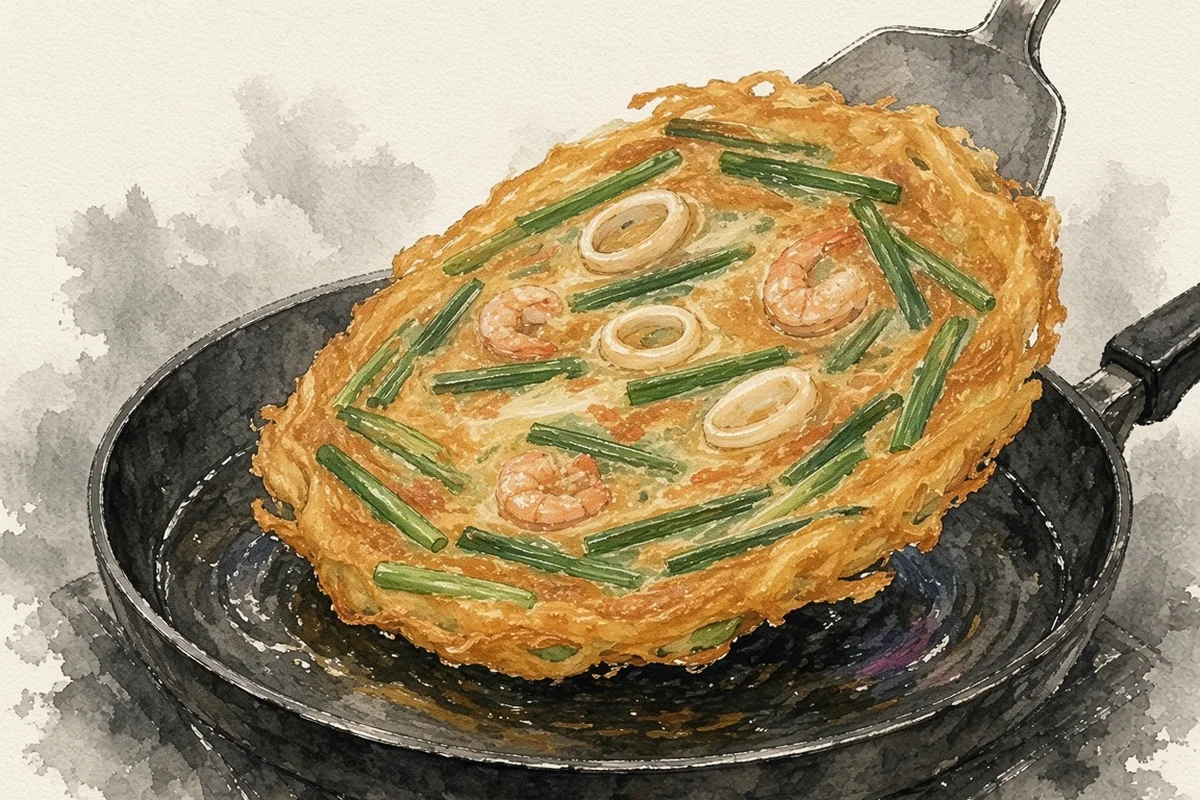
Haemul pajeon is the Korean seafood pancake that comes to the table on rainy days: whole green onions laid side by side, a scatter of squid, shrimp and clams, and a thin batter fried in plenty of oil until the edges shatter. This pajeon recipe follows the method most Korean home cooks agree on, so you can make it in one pan in about 30 minutes.
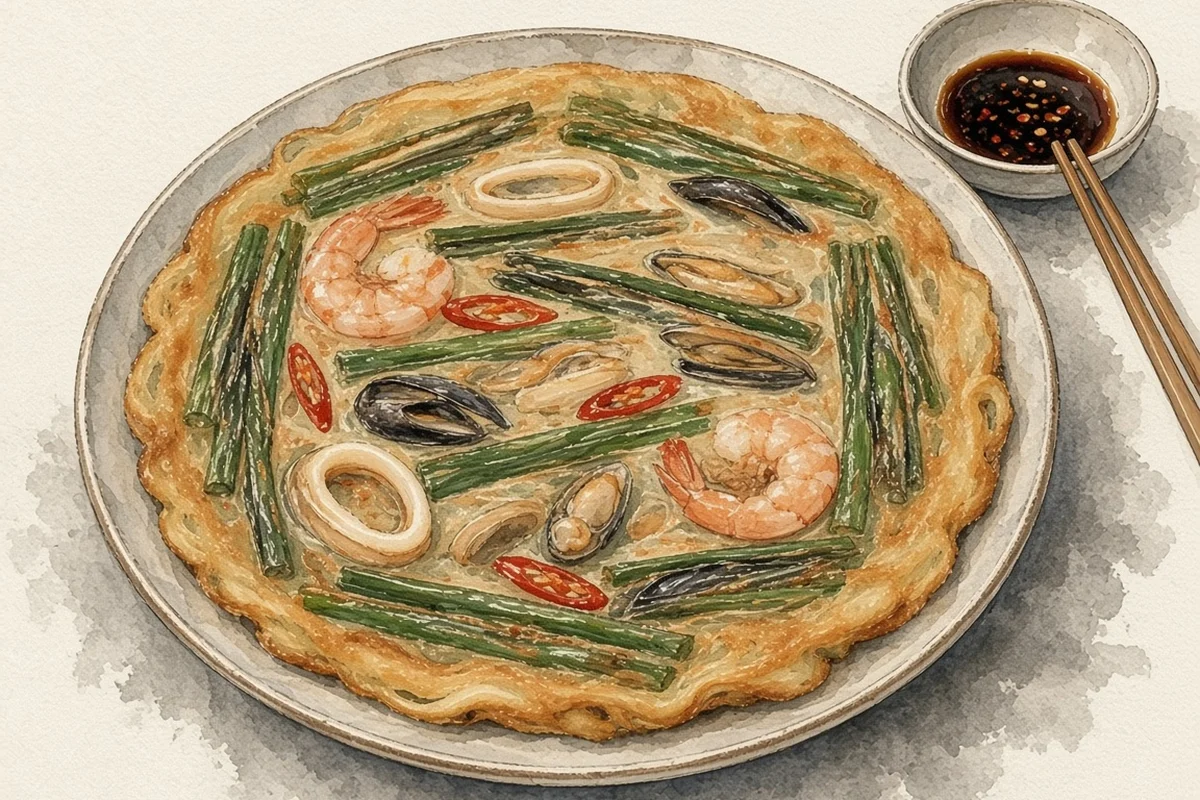
Ingredients for the Korean seafood pancake
T = tablespoon (15 ml), t = teaspoon (5 ml), cup = 200 ml (a Korean paper cup is about 180 ml).
Pancake
- 1 large handful (about 100 g) jjokpa, the thin Korean green onion — or slim scallions
- 150–200 g mixed seafood: squid rings, peeled shrimp, clam meat and/or mussel meat (a frozen seafood mix works)
- 1–2 eggs, beaten
- 1 green chili and 1 red chili, thinly sliced (optional)
- 4–5 T neutral cooking oil, plus more for the second side
Crispy batter
- ½ cup Korean pancake mix (buchim-garu)
- ½ cup Korean frying mix (twigim-garu), or 1–2 T rice flour mixed into all-purpose flour
- About ¾ cup ice-cold water, plus 2–3 ice cubes
- A pinch of salt (skip if your pancake mix is already seasoned)
Dipping sauce (cho-ganjang)
- 2 T soy sauce, 1 T vinegar, 1 T water, ½ t sugar
- ½ t gochugaru (Korean chili flakes), ½ t toasted sesame seeds
- A little finely chopped onion or chili (optional)
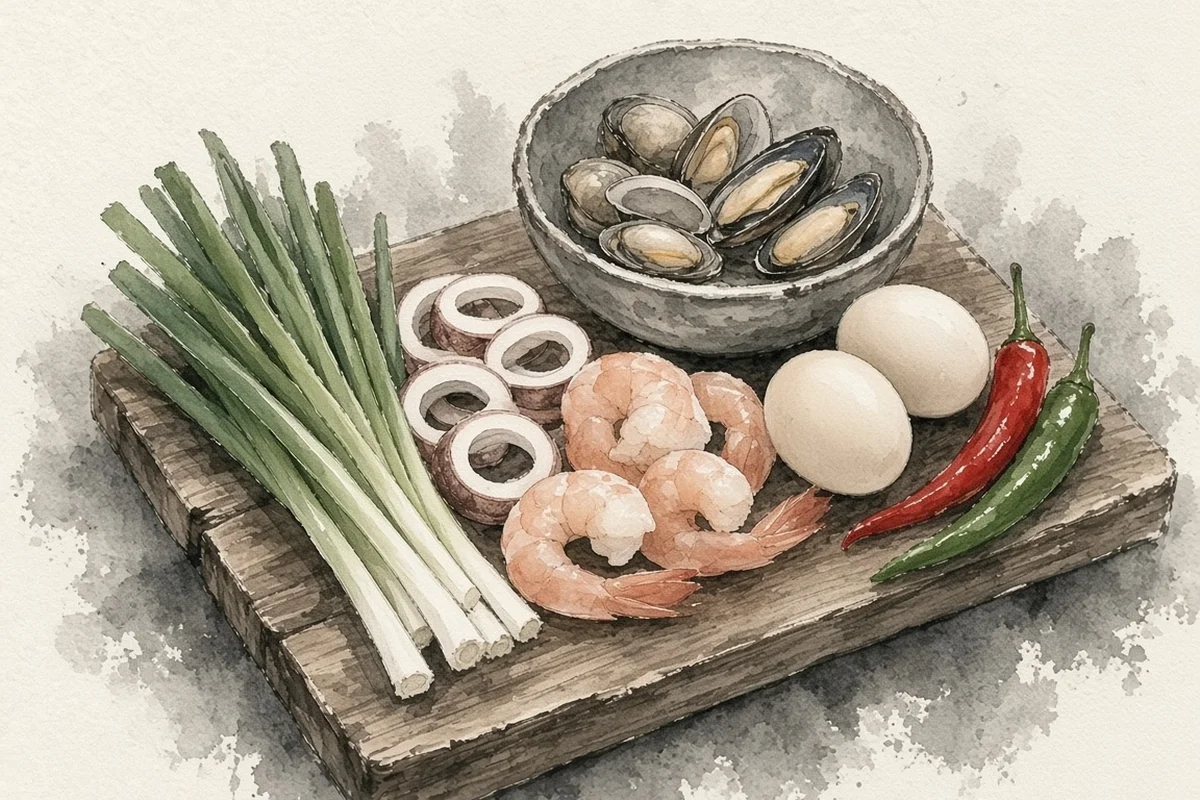
How to make haemul pajeon, step by step
- Trim the roots and any wilted tips from the green onions, rinse, and shake them very dry. Cut them to the width of your pan so they can lie flat in long stalks; halve the thick white ends lengthwise.
- Rinse the seafood, drain in a sieve, and press dry with paper towels. Water left on the seafood thins the batter and softens the crust. A splash of cooking wine or a pinch of pepper helps with any fishy smell.
- Mix the dip first so the flavors settle while you cook.
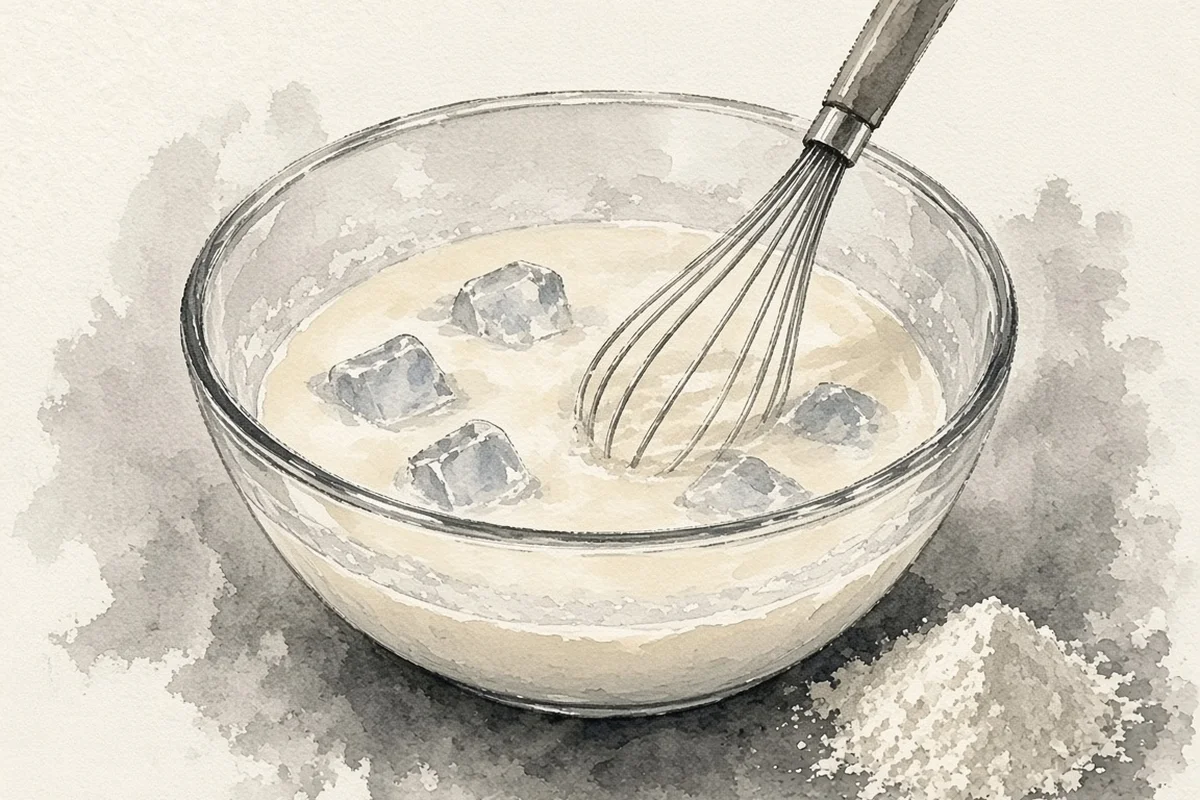
- Just before frying, stir the pancake mix and frying mix with the ice-cold water and ice. Mix only until no dry flour remains — a few lumps are fine. It should run off a spoon like thin cream.
- Heat the pan over medium-high and add 4–5 T oil — enough to coat the whole surface generously. Spread a thin ladle of batter in a circle, then lay the green onions over it side by side, all in the same direction.
- Scatter the seafood and chilies evenly between the onions, then drizzle a little more batter over just to glue everything together. Pour the beaten egg on top, then lower the heat to medium.
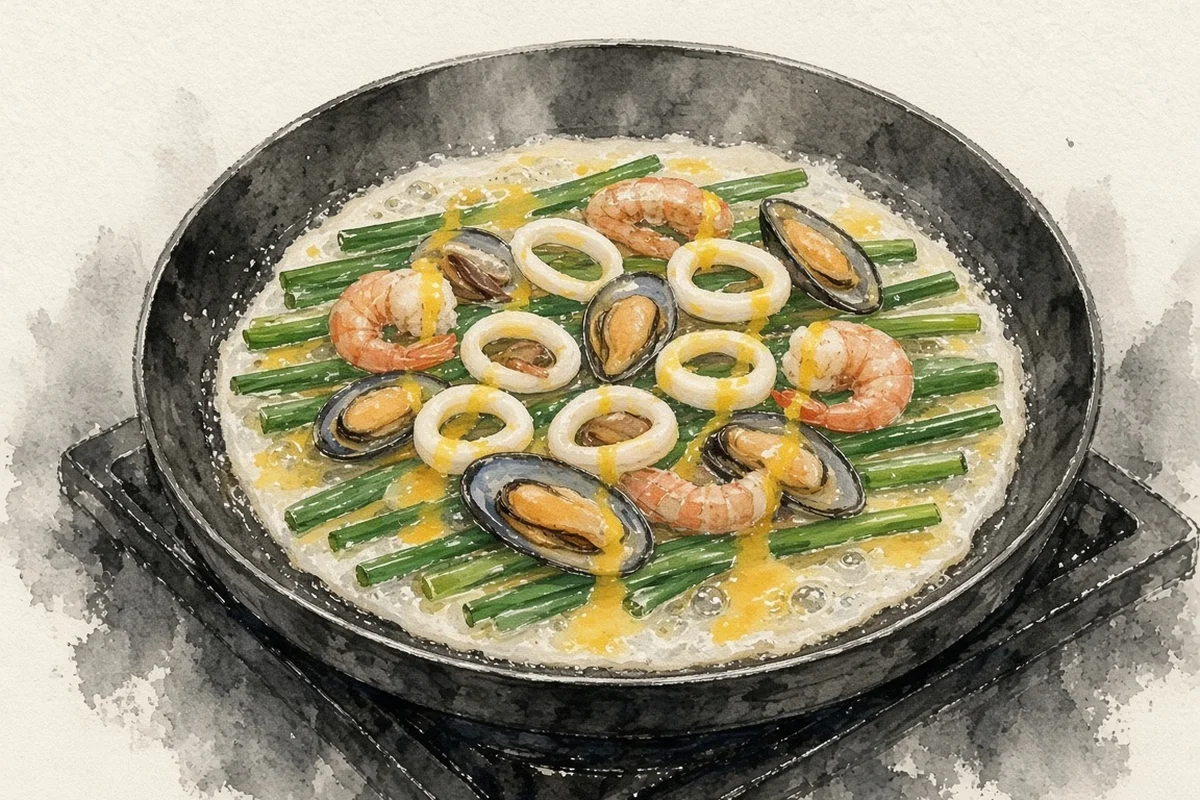
- Fry for 4–5 minutes, shaking the pan now and then, until the underside is deep golden and the whole pancake slides when you shake the pan.
- Flip it in one confident motion with a wide spatula (or slide it onto a plate and invert it back). Add 1–2 T more oil around the edge and press the pancake down gently.
- Cook the second side for 3–4 minutes until crisp, flip once more for 30 seconds if you want the top extra crunchy, then slide onto a plate.
Tips for a crispy seafood scallion pancake
- Keep it cold. Ice water slows gluten and the temperature shock in hot oil makes a lighter, crunchier crust. Mix the batter at the last minute.
- Add frying mix or rice flour. Pancake mix alone gives a softer pancake; blending in frying mix (often 1:1) or a spoonful of rice flour is the most common Korean trick for crispness.
- Use less batter than you think. The batter should only bind the onions and seafood. Too much turns the pancake thick and doughy.
- Be generous with oil. Pajeon is shallow-fried, not dry-fried. Add a little more oil around the edge after flipping.
- Flip once and press. Wait until the bottom is set and golden before turning; flipping too early breaks it apart.
- Medium heat after the start. Seafood and onions are thick, so very high heat burns the outside before the middle cooks.
How to serve this pajeon recipe
Cut the pancake into wedges or squares, or tear it apart with chopsticks the Korean way, and dip each bite in the soy-vinegar sauce. Eat it right away — the crust softens as it sits. In Korea it is a classic rainy-day dish, often paired with makgeolli (rice wine).
Source and editorial record
Original CookKorea recipe, written by comparing several widely used Korean home recipes for haemul pajeon; no text is reproduced from them. English drafting used automated assistance; draft prepared 27 October 2026. Quantities are a consensus starting point, not an independent kitchen test.
Ink-wash illustrations are visual interpretations, not documentary photographs of the recipe steps.