Sweet and Tangy Korean Radish Salad (Musaengchae) That Stays Crisp, Not Watery
Hand-cut radish is briefly cured with sugar and salt, drained, then dressed with chili flakes, soy, tuna extract and vinegar so the salad doesn't turn watery. A simple banchan made from one radish and basic pantry seasonings.
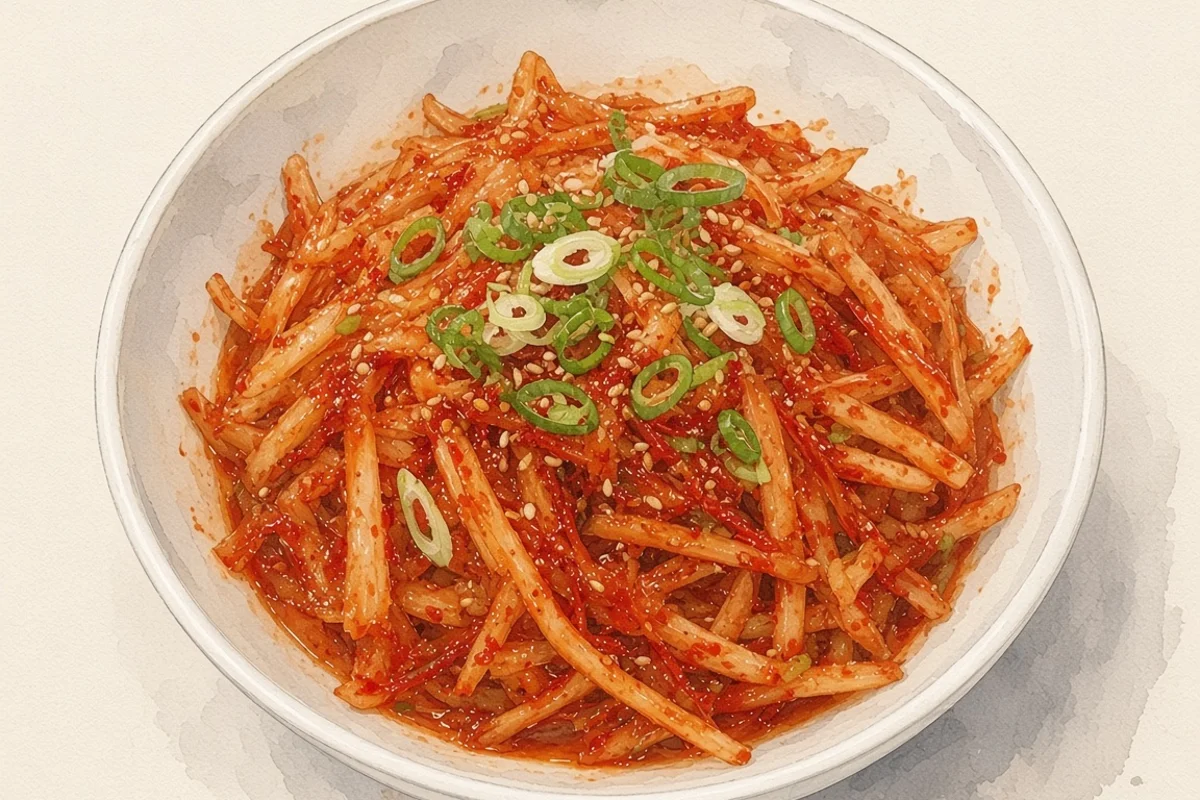
Ingredients in the recorded preparation
T = Korean rice spoon (about 1 tablespoon).
- 500 g Korean radish (mu)
- A suitable amount of green onion or scallion
- 4 T sugar
- 0.5 T salt
- 4 T gochugaru (Korean chili flakes)
- 2 T soy sauce
- 1 T tuna extract (chamchi-aek)
- 3 T vinegar
- Toasted sesame seeds
The author notes that autumn radish makes this salad especially good, and that everything else is a basic pantry seasoning.
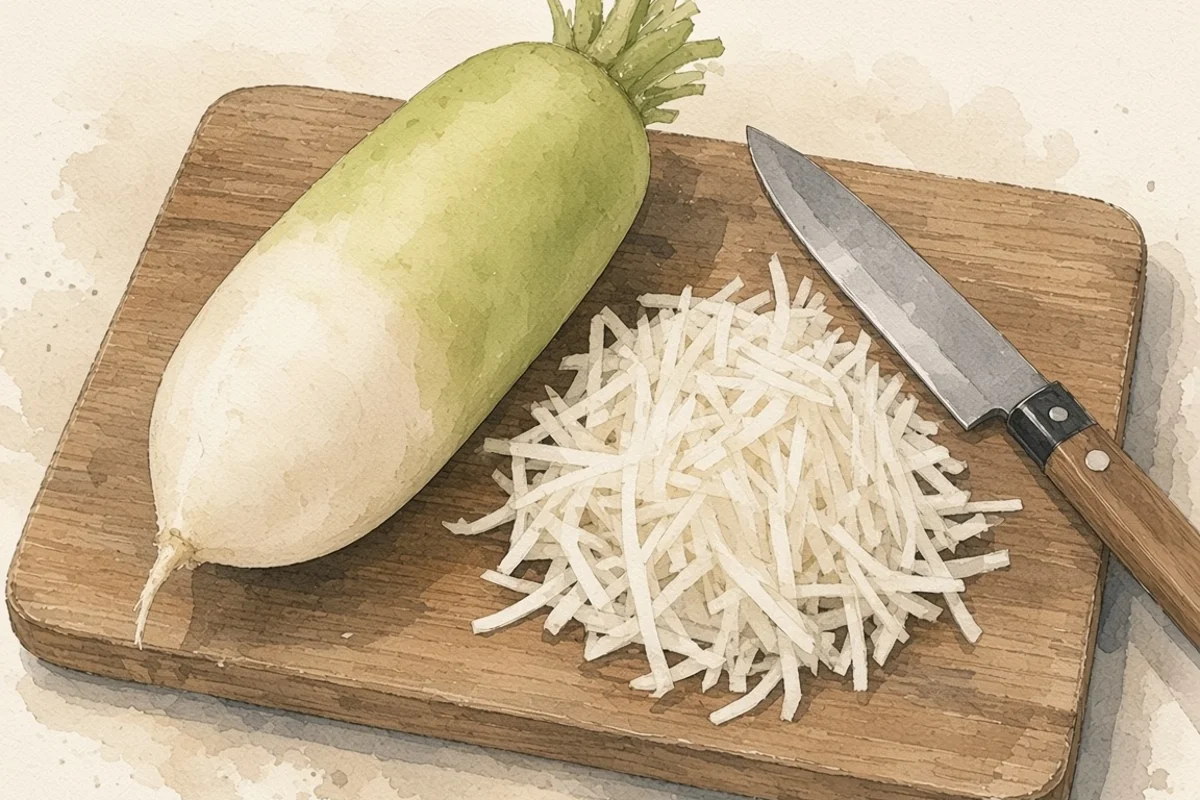
Recorded cooking sequence
- Wash and peel the 500 g radish, then cut it into evenly thick matchsticks. Toss with 4 T sugar and 0.5 T salt and let it cure for about 5 minutes.
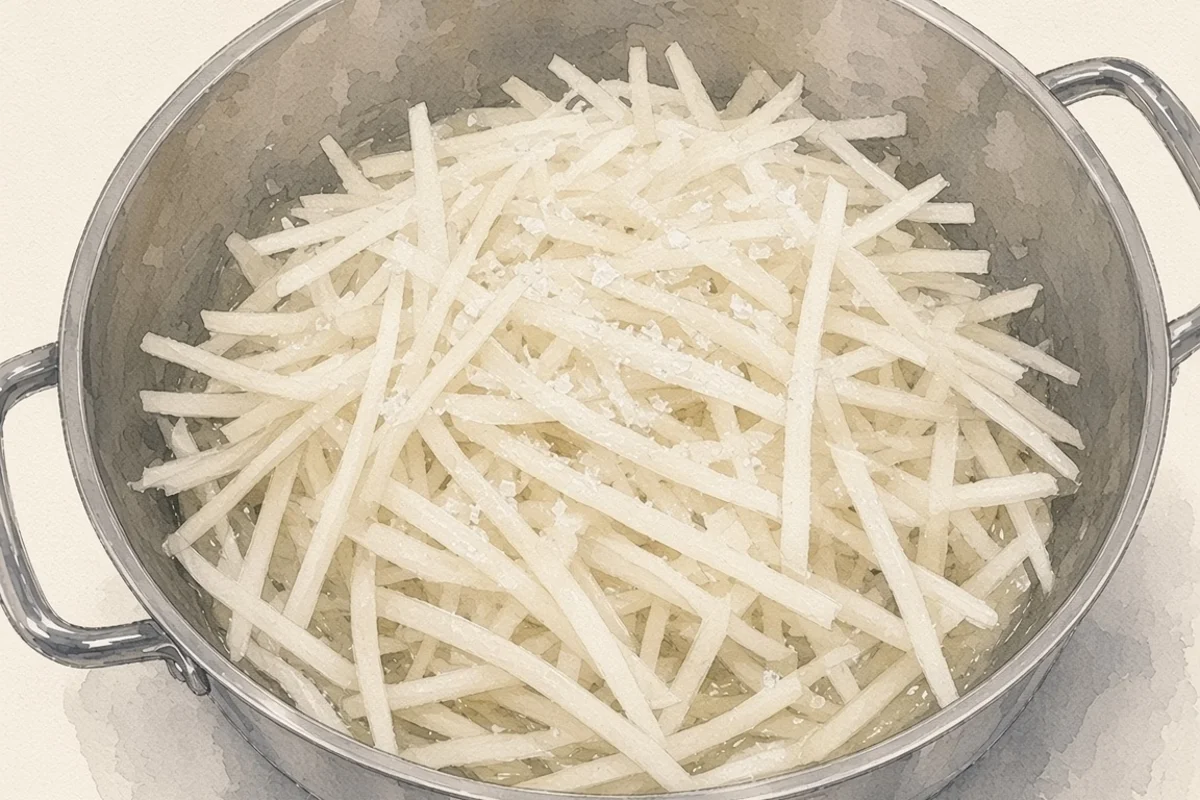
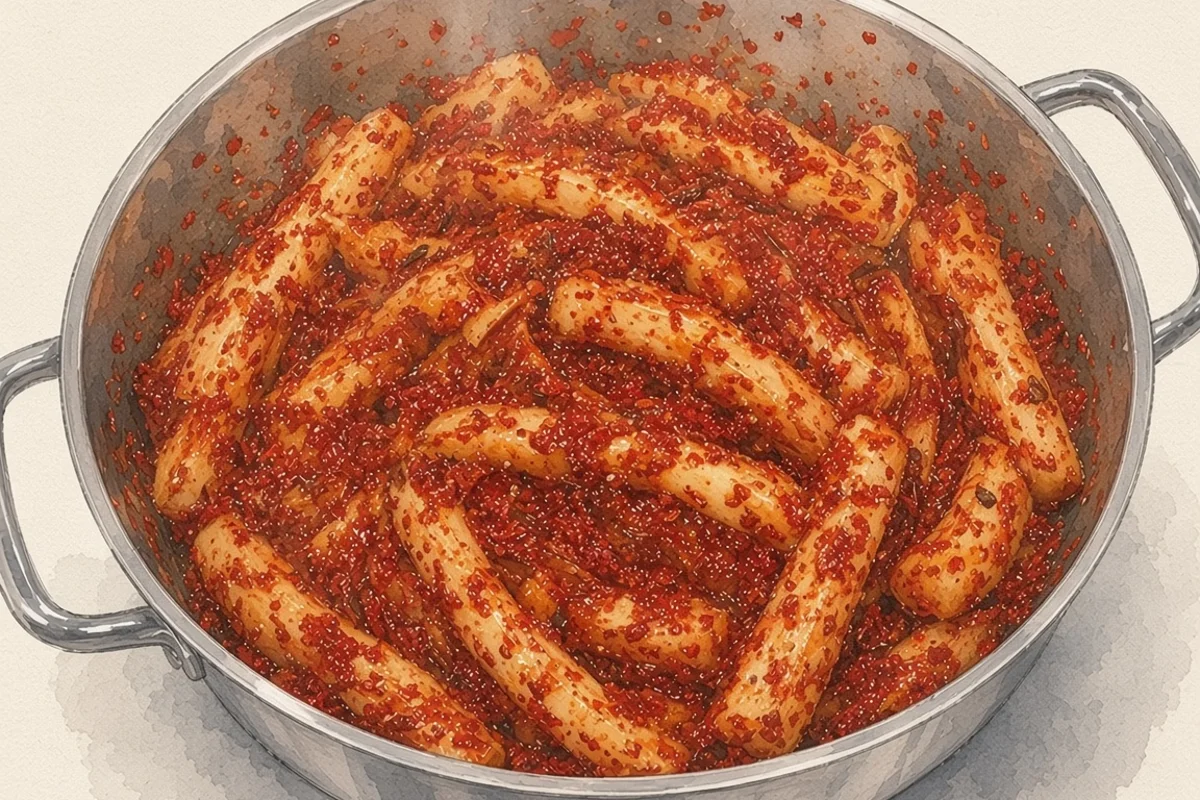
- Pour off the liquid the radish released, then add 4 T gochugaru first to give the radish its color.
- Add 2 T soy sauce, 1 T tuna extract and 3 T vinegar and toss evenly. Finally add the sliced green onion or scallion, toss lightly once more, and sprinkle with sesame seeds.
Tips from the source
- Cut the radish by hand with a knife: the texture is better and the strips don't soften as easily.
- Draining the liquid released during the short cure before seasoning is the key point — the salad stays relatively crisp in storage and no watery dressing pools at the bottom.
- Pre-curing with sugar and salt helps the seasoning come together and keeps the sweet-sour balance.
How to serve
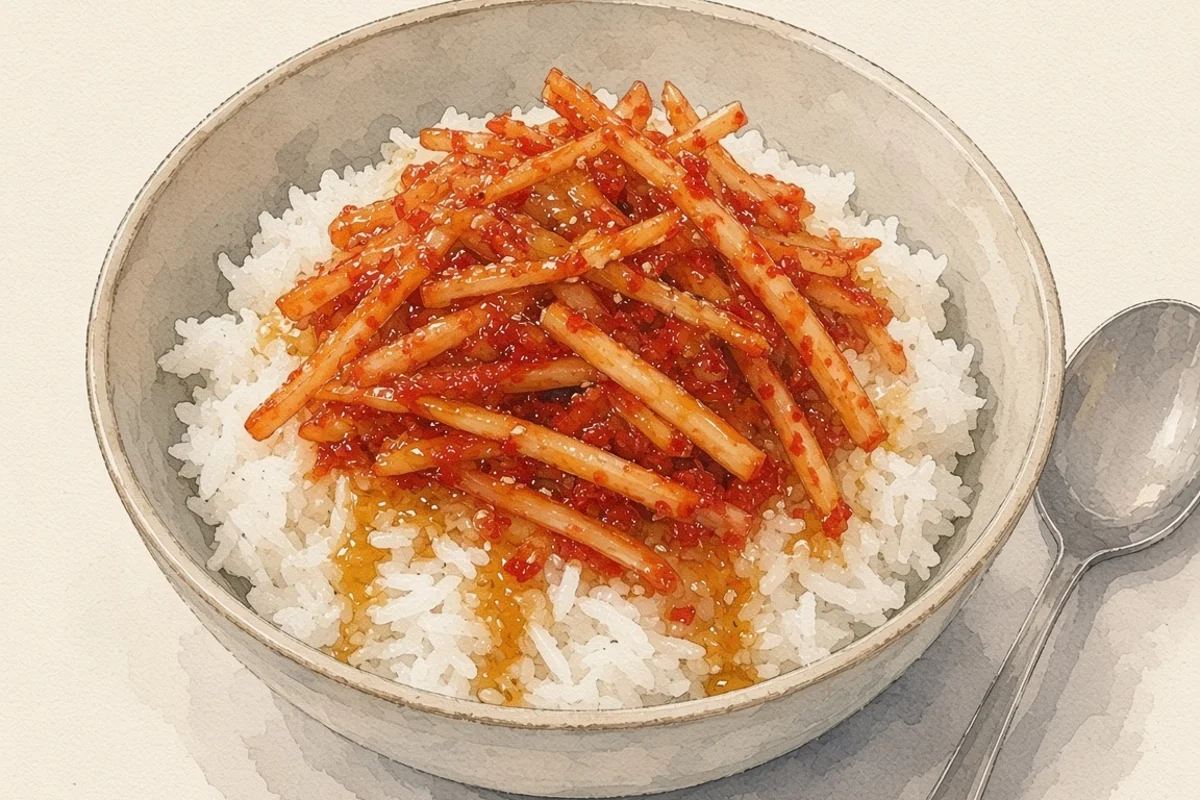
Serve it alongside meat dishes or soups, or spoon it over hot rice with a swirl of sesame oil and mix it as a quick bibimbap. It keeps well as a make-ahead side dish (banchan). No serving count or nutrition figures are given in the source, so none are added here.
Source and editorial record
Adapted with permission from the Korean kitchen record by gayagum12 on NAVER. English drafting used automated assistance. Source comparison completed for this edition on 4 November 2026. Original observations belong to the credited author; this edition is not an independent kitchen or product test.
Ink-wash illustrations are visual interpretations, not documentary photographs of the recipe steps.