Korean Oyster Soup (Gulguk) with Radish and Tofu: A Clean, Light Broth
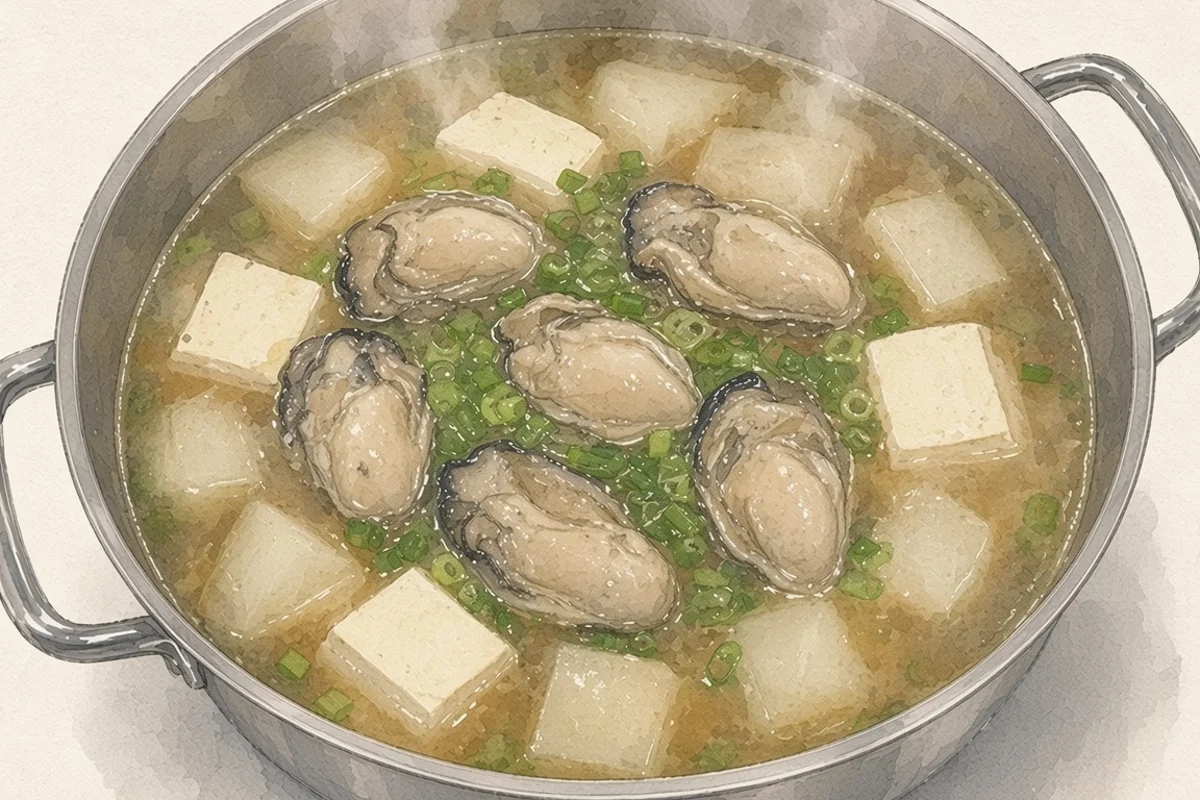
Fresh oysters are rinsed gently, then simmered briefly in a radish and tofu broth and finished with a spoonful of vinegar to lift the flavor. Radish brings sweetness and tofu adds a soft, filling texture.
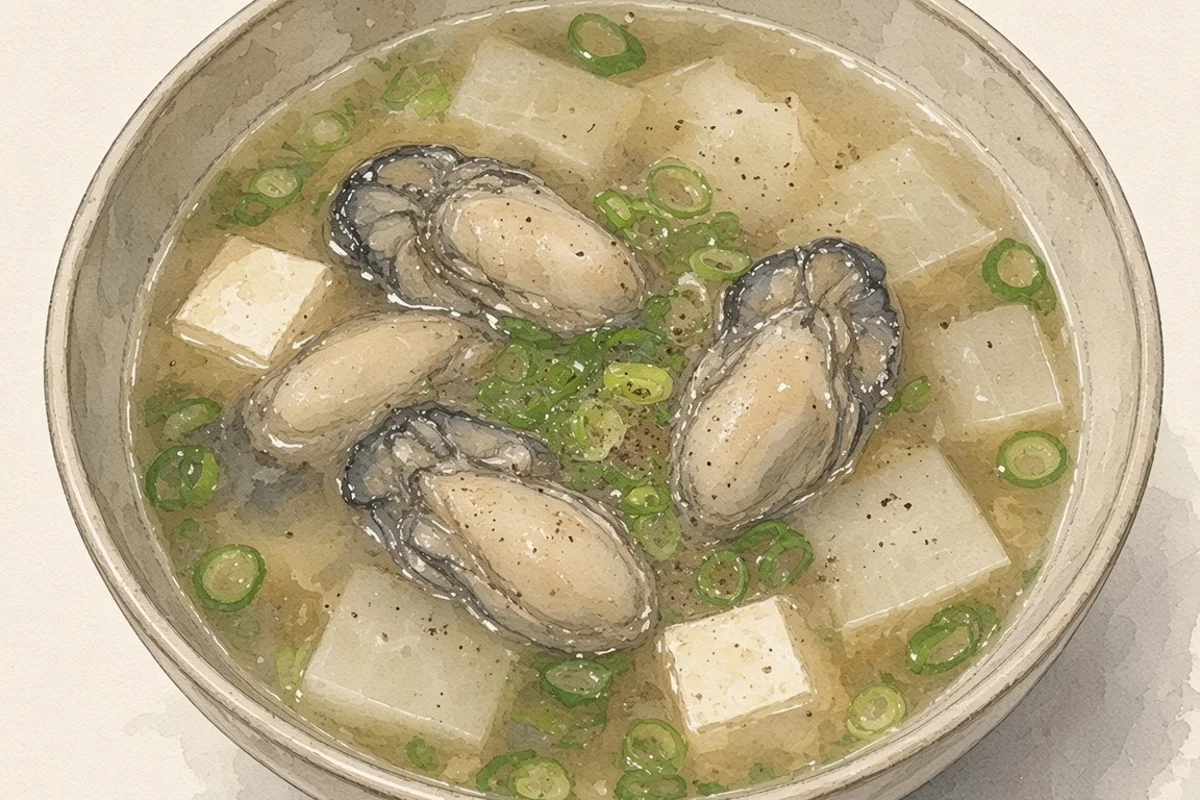
Ingredients in the recorded preparation
T = Korean rice spoon (about 1 tablespoon).
- 500 g fresh shucked oysters
- 0.5 T salt (for cleaning the oysters)
- 1,000 ml water
- 350 g Korean radish (mu)
- 2 packets powdered broth (bunmal yuksu)
- ½ block tofu
- 1 T minced garlic
- 2 T tuna extract (chamchi-aek)
- A little scallion or green onion
- 1 T vinegar
- Black pepper
The author bought the fresh oysters at Costco. The tofu can be left out, but it adds a soft texture that pairs well with the oysters.
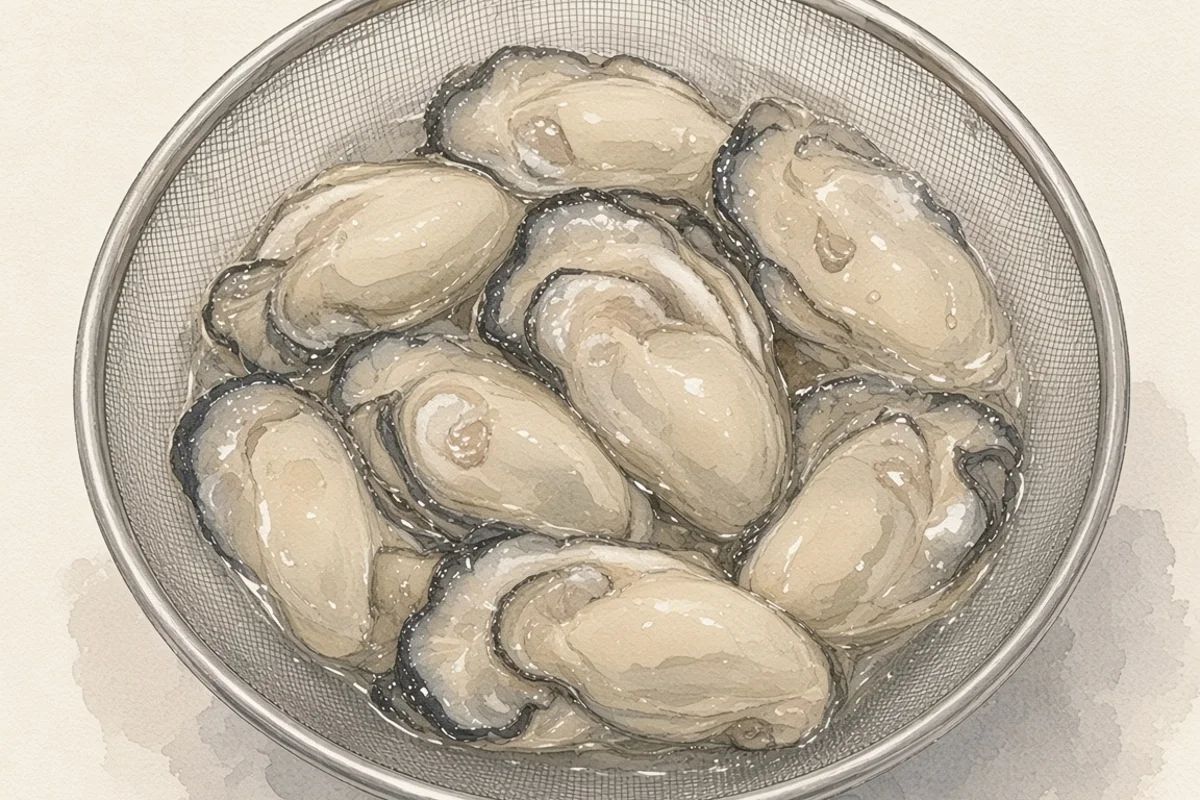
Recorded cooking sequence
- Gently massage the 500 g oysters with 0.5 T salt, rinse them under running water two or three times, and drain in a strainer.
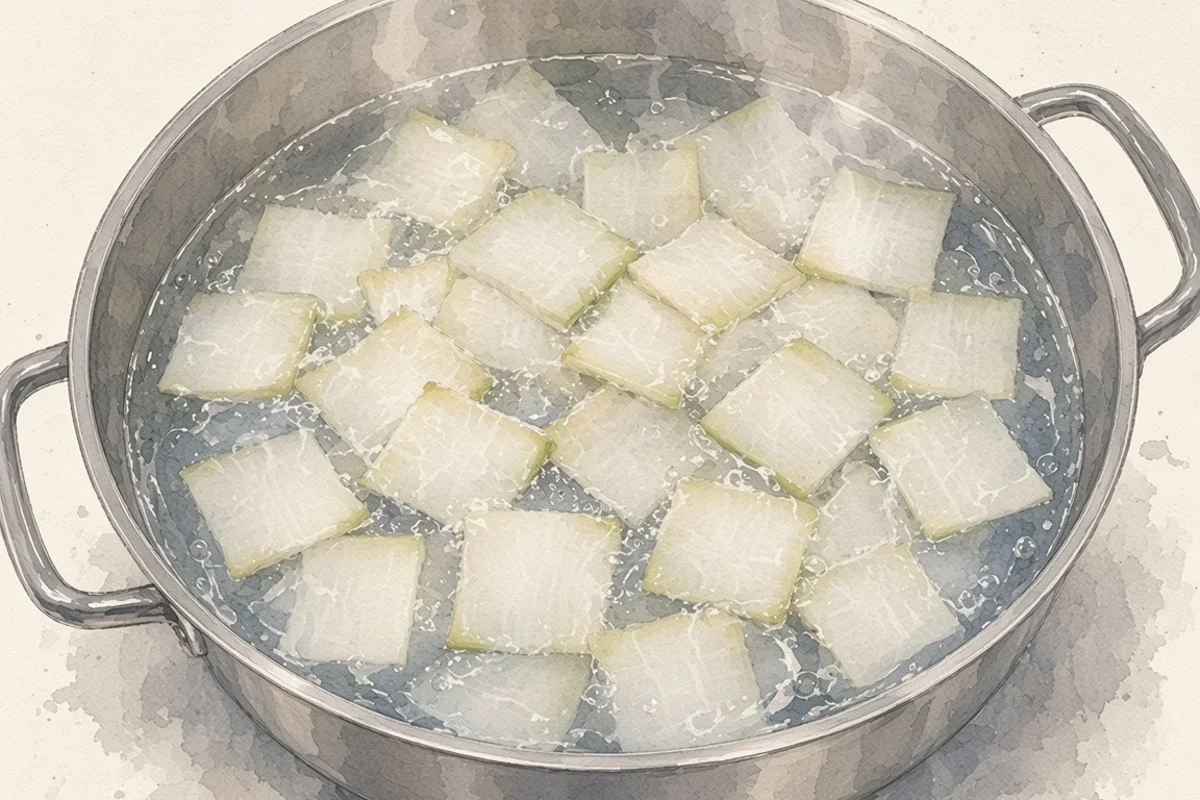
- Cut the 350 g radish into thin, flat bite-size squares (nabak-sseolgi). Put them in a pot with 1,000 ml water and boil hard over high heat; when it boils, add the 2 packets of powdered broth.
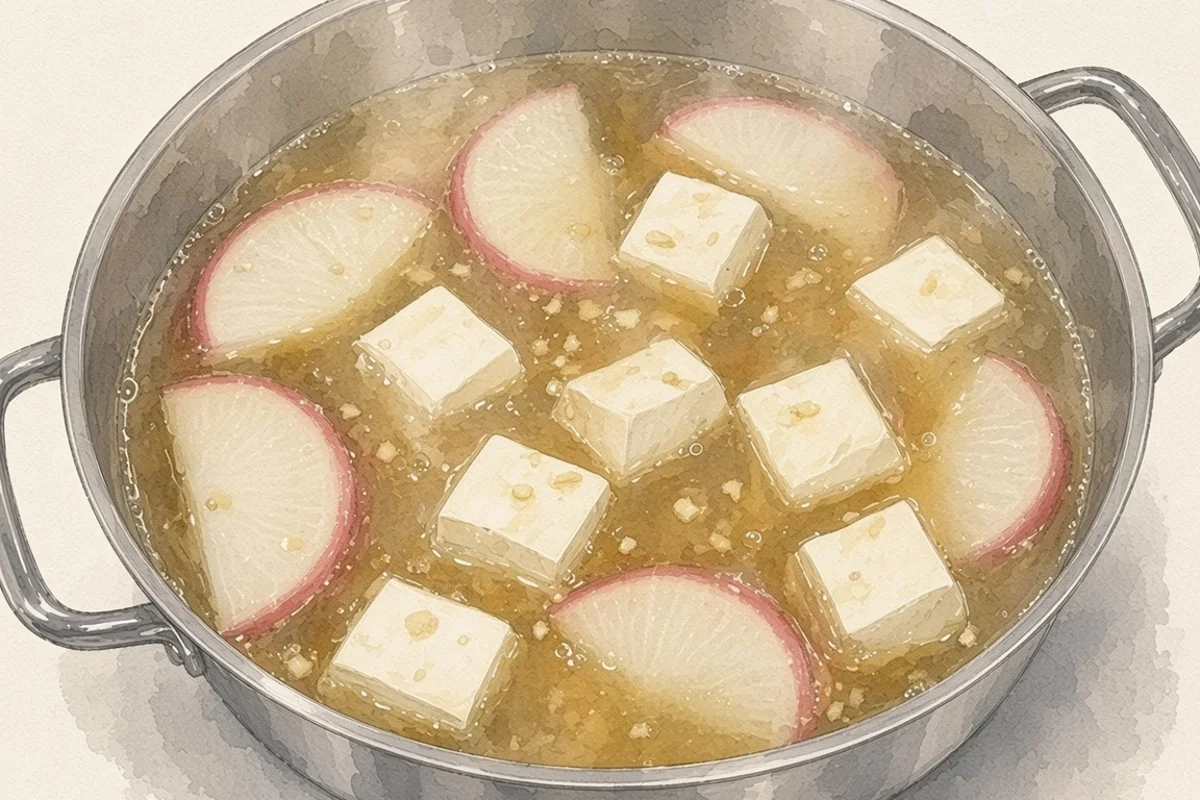
- Season the broth with 2 T tuna extract, add the ½ block of tofu and 1 T minced garlic, and simmer until the radish is cooked through.
- Once the radish is tender, add the cleaned oysters and boil for 2 minutes. When the broth comes back to a boil, add the sliced scallion or green onion. Skim off any foam that forms.
- Finally stir in 1 T vinegar. Ladle into bowls and finish with a sprinkle of black pepper.
Tips from the source
- Don't wash the oysters too long or rub them hard — the flesh can turn mushy. Clean them lightly, just removing any debris on the surface.
- Boil the radish first to draw out its clean, refreshing flavor, and add the oysters last to keep their aroma and texture.
- The final 1 T of vinegar takes away any fishy note, keeps the oysters plump, and brings out a deeper, cleaner savoriness.
How to serve
Serve hot with a bowl of rice as a warming seasonal soup. The author notes that oysters contain protein, zinc and vitamin B12, and that with radish and tofu the soup makes a good accompaniment to a meal. No serving count or nutrition figures are given in the source, so none are added here.
Source and editorial record
Adapted with permission from the Korean kitchen record by gayagum12 on NAVER. English drafting used automated assistance. Source comparison completed for this edition on 4 November 2026. Original observations belong to the credited author; this edition is not an independent kitchen or product test.
Ink-wash illustrations are visual interpretations, not documentary photographs of the recipe steps.