Beef Shank and Broth: A Separate Blanching Pot and Simmering Pot
The first two litres belong to a discarded blanching stage; the next three litres belong to the broth-making stage.
Ingredients in the recorded preparation
- About 1.5–2 kg beef shank
- 2 litres water for blanching. Main pot: 3 litres water, 2 onions, 2 green-onion stalks, 2 handfuls whole garlic, peppercorns, 3–4 bay leaves, and 4 T Korean soup soy sauce.
Recorded cooking sequence
- Blot and trim the beef, then cut each piece into three sections.
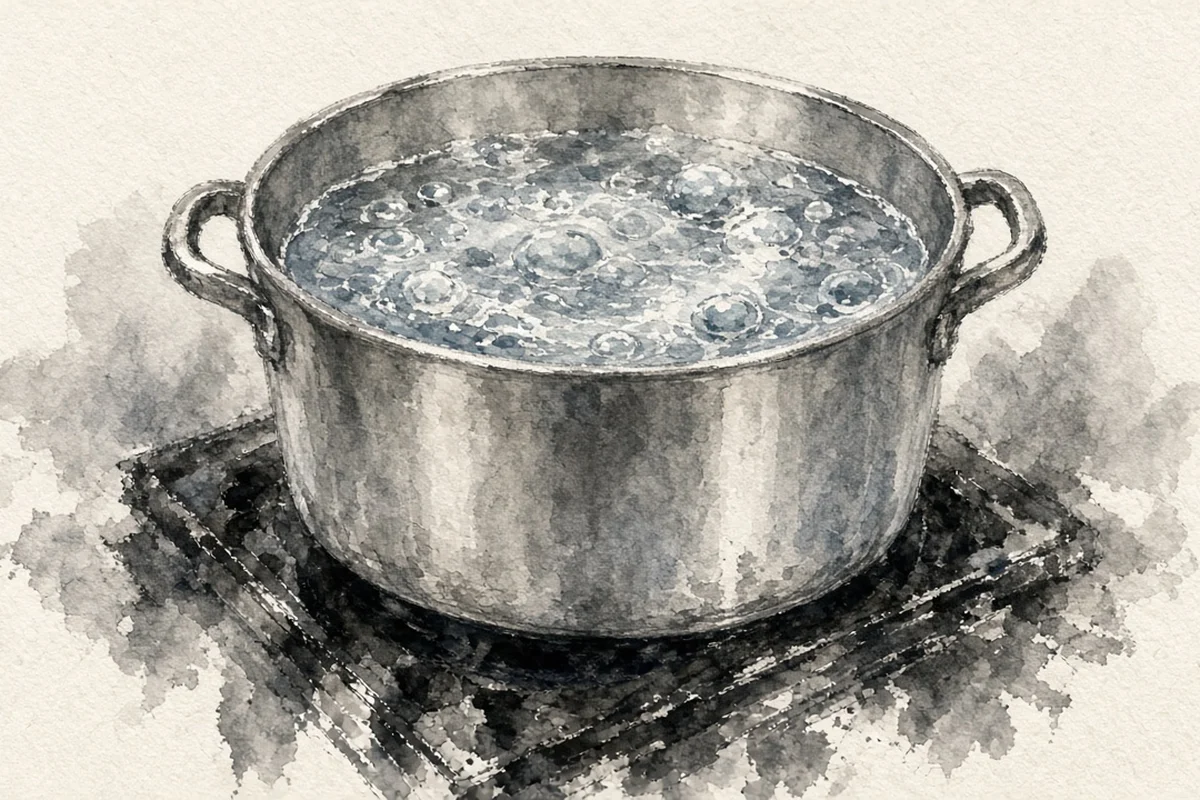
- Blanch in the 2 litres boiling water for five minutes and rinse.
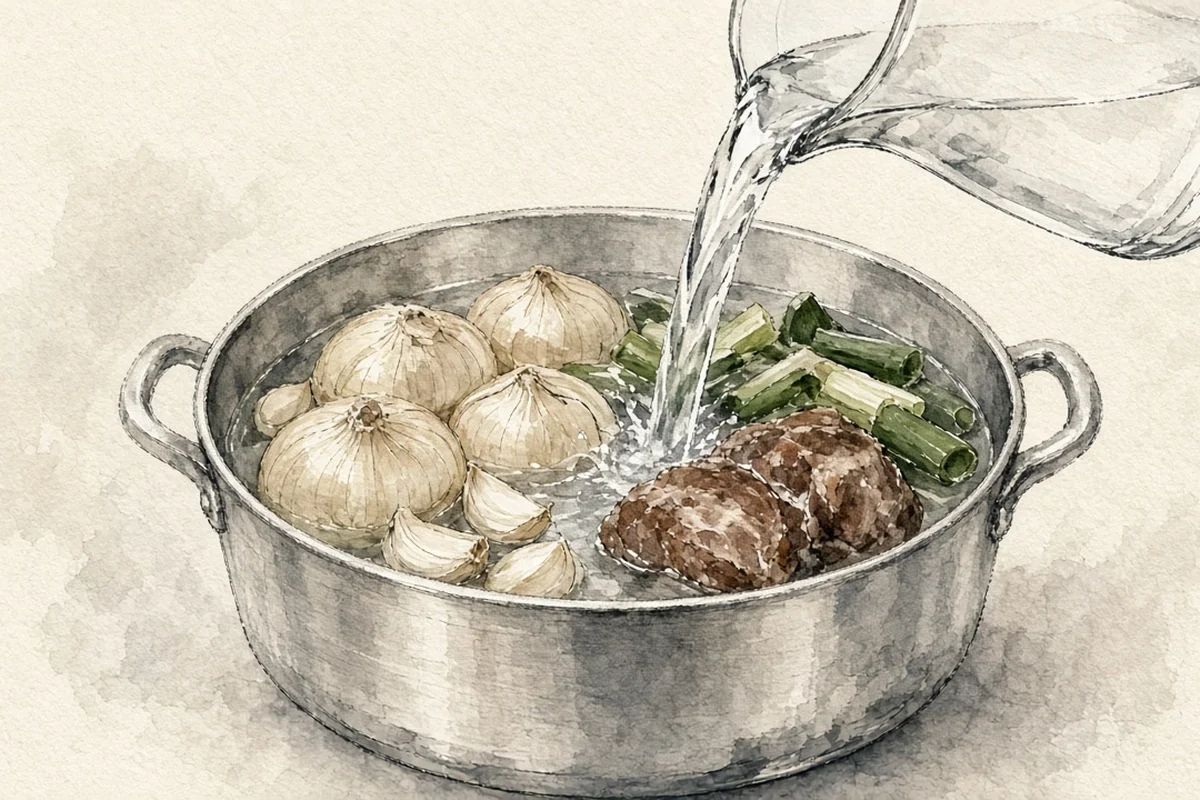
- Start the main pot with the rinsed beef, aromatics, 3 litres water, and soup soy sauce.
- Bring to a boil over high heat, then cover and simmer over medium-low heat for one hour as recorded.
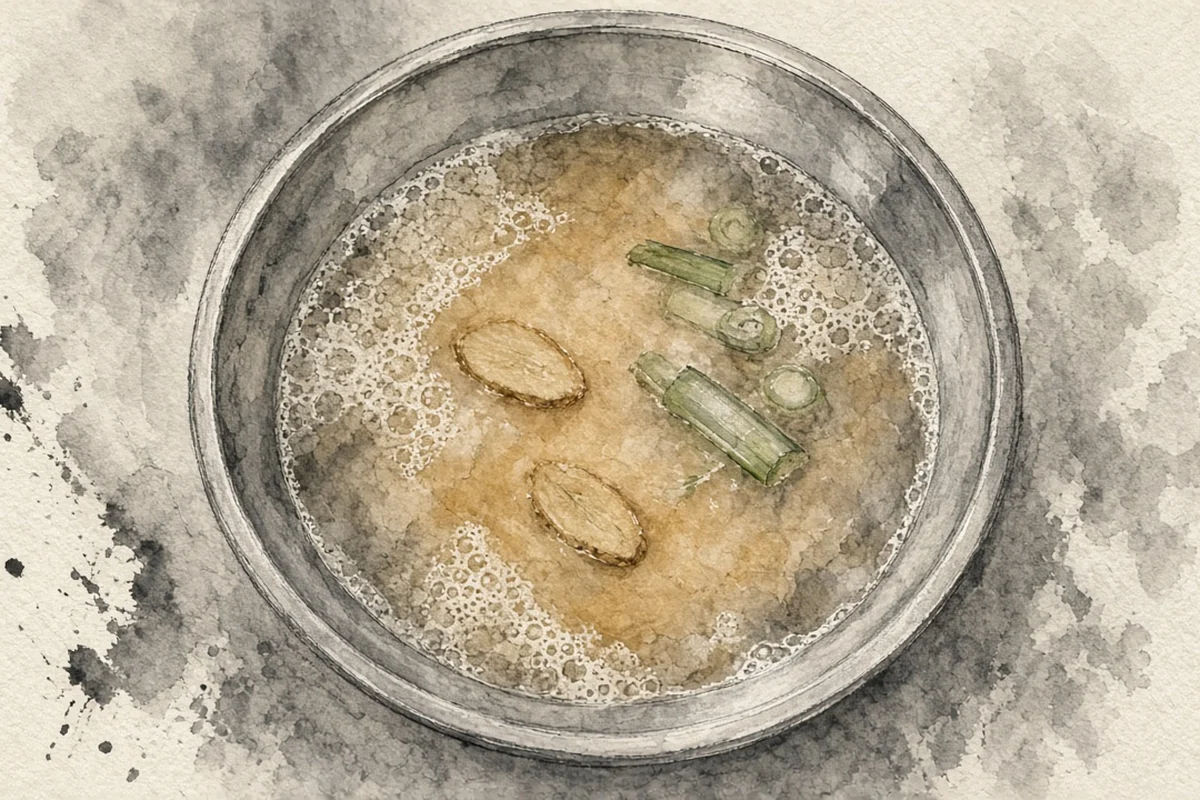
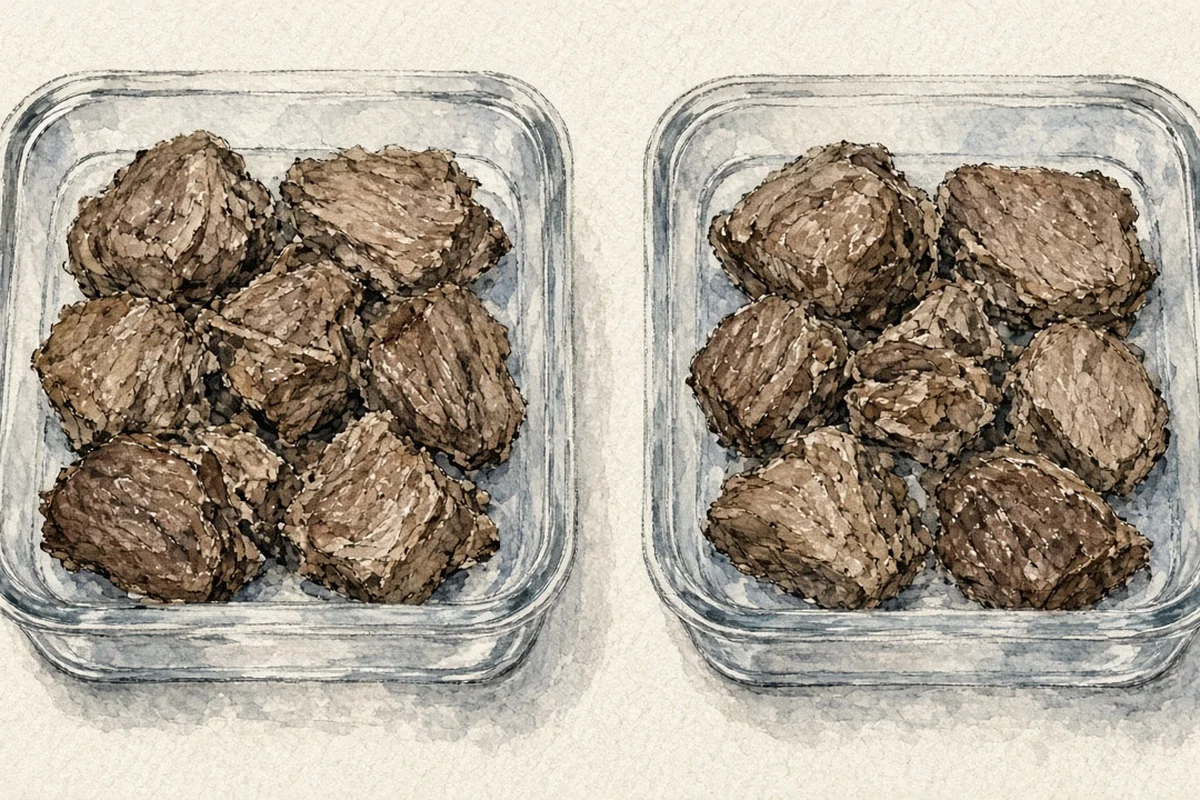
- Lift out the beef and strain the broth. Slice the meat for soup or cut larger pieces for braising.
What makes this method different
The first two litres belong to a discarded blanching stage; the next three litres belong to the broth-making stage. Confusing those amounts would change the broth concentration. The source also gives a reuse distinction: it suggests equal parts broth and water for several soups, but undiluted broth for a soy-braising preparation. Those are starting points from this cooking record, not complete recipes for all the later dishes.
Measurements and recipe scope
The one-hour simmer is the author’s recorded batch rather than a tenderness guarantee for every cut. Garlic and peppercorns are not weighed. The source describes cooling and later removing hardened fat but does not establish a safe storage life; no extra preservation duration is inferred.
Source and editorial record
Adapted with permission from the Korean kitchen record by gayagum12 on NAVER. English drafting used automated assistance. Source comparison completed for this edition on 13 October 2026. Original observations belong to the credited author; this edition is not an independent kitchen or product test.
Ink-wash illustrations are visual interpretations, not documentary photographs of the recipe steps.