Dried Pollack and Egg Porridge: Letting the Eggs Set Before Stirring
The recipe starts with cooked rice, not dry rice.
Ingredients in the recorded preparation
- A handful dried pollack
- 2 T perilla oil
- 100 ml water initially
- 1 packet broth powder
- 1 bowl cooked rice
- another 400 ml water
- tuna seasoning sauce (quantity captured as “1”, unit missing)
- chopped green onion
- 2 eggs
- pepper and sesame seeds.
Recorded cooking sequence
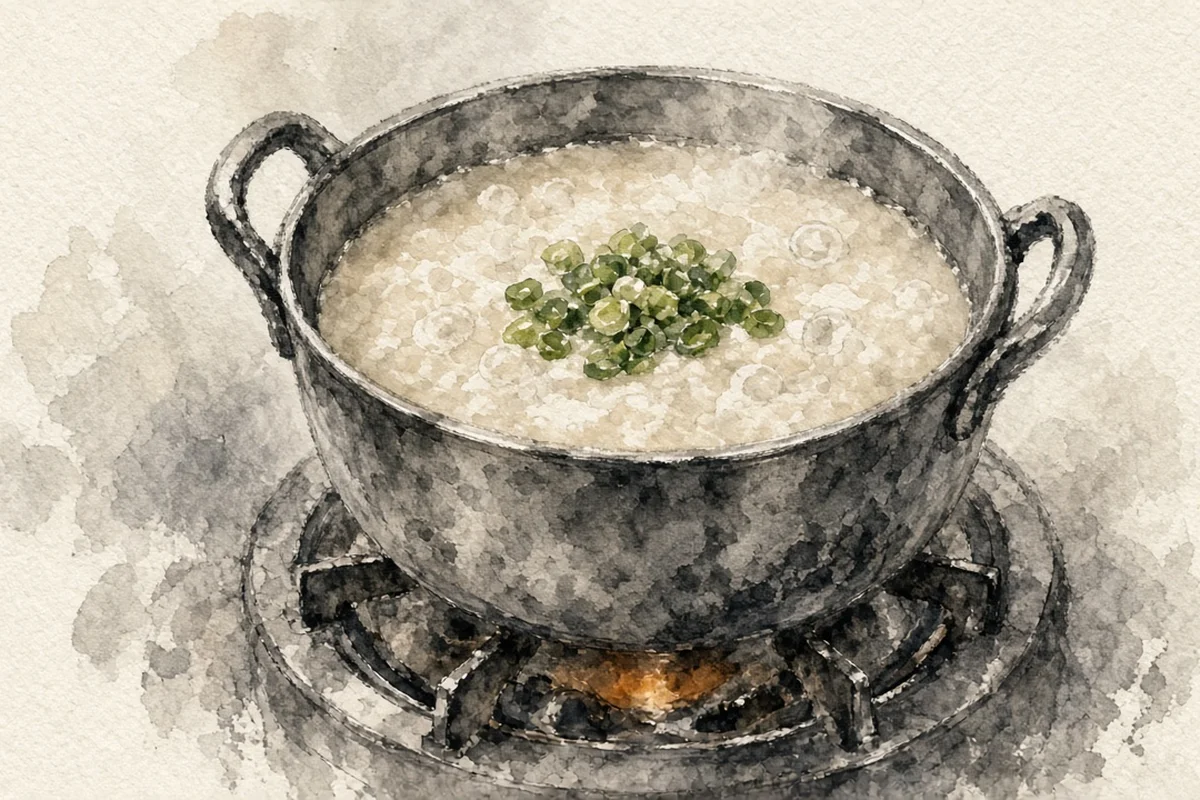
- Cut the dried pollack and bring it to a boil with perilla oil and the first 100 ml water.
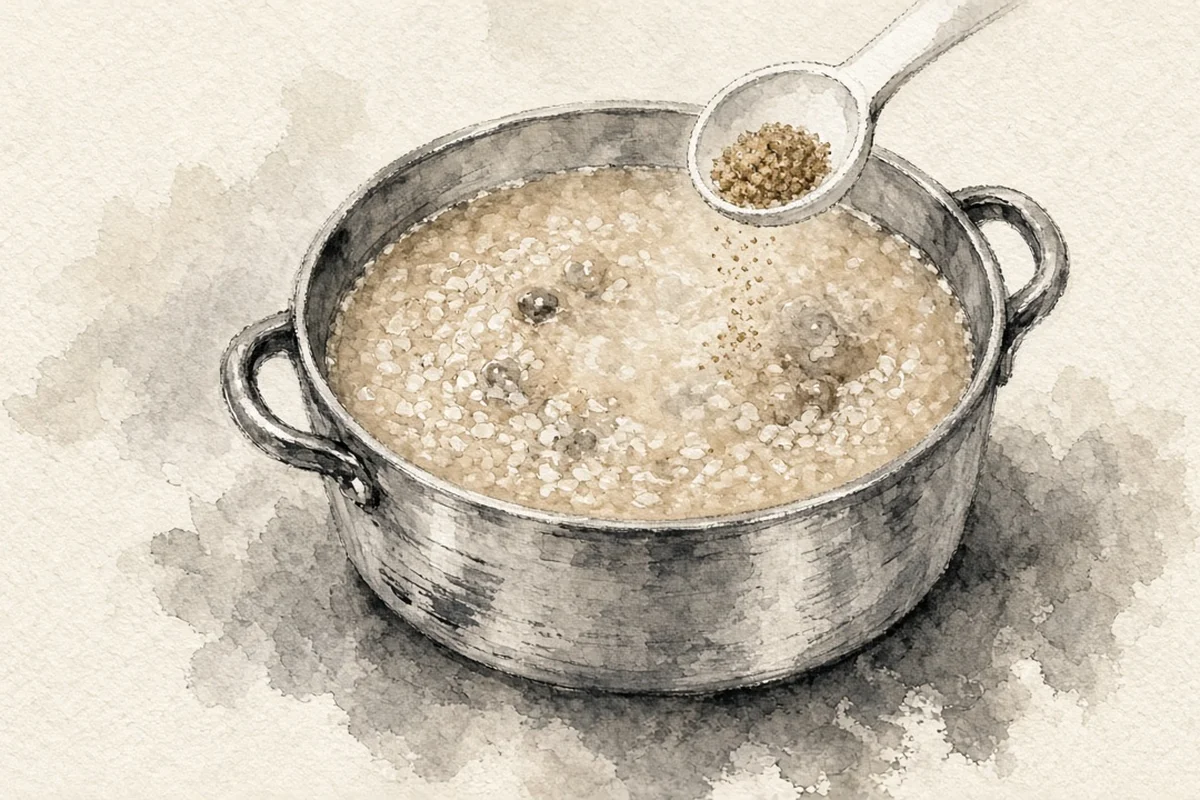
- When the broth turns cloudy, add broth powder, cooked rice, and the additional 400 ml water.
- Cook over medium-high heat until the rice loosens into the broth.
- Season, reduce to medium-low heat as the liquid reduces, and add chopped green onion.
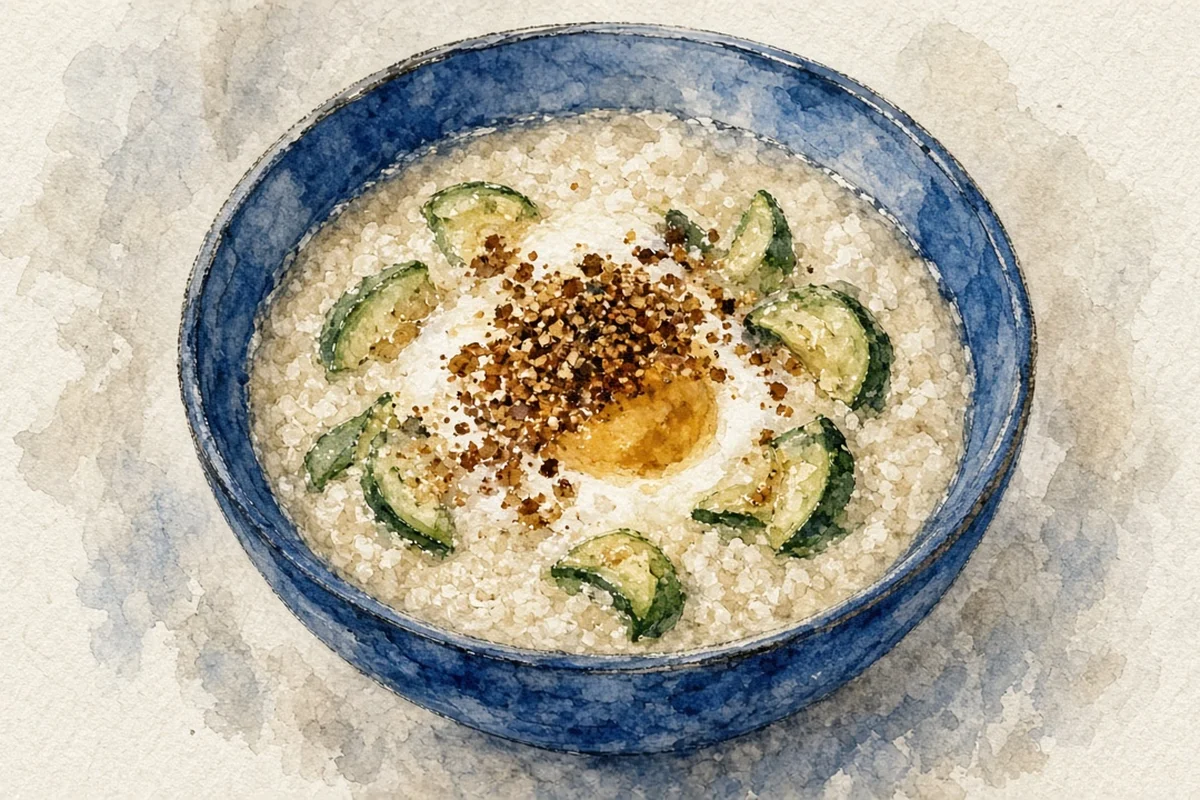
- Pour in the beaten eggs and leave briefly without immediate stirring. Mix once they set and finish with pepper and crushed sesame seeds.
What makes this method different
The recipe starts with cooked rice, not dry rice. That distinction explains its short preparation style and prevents the two water additions from being mistaken for a raw-rice cooking ratio. The egg is poured into the porridge late and left to set before mixing; the source says immediate stirring changes how the egg absorbs the broth.
Measurements and recipe scope
The tuna-seasoning unit and the weights of the rice and dried pollack are missing. Treat this as a source-based method guide rather than a fully weighed formula. Medical recovery and treatment claims from the surrounding original story are not adopted as advice.
Source and editorial record
Adapted with permission from the Korean kitchen record by gayagum12 on NAVER. English drafting used automated assistance. Source comparison completed for this edition on 13 October 2026. Original observations belong to the credited author; this edition is not an independent kitchen or product test.
Ink-wash illustrations are visual interpretations, not documentary photographs of the recipe steps.