Salted Eggplant Stir-Fry: A Chewy Filling for Gimbap
This Korean recipe uses salted, squeezed eggplant as a side dish and a gimbap filling. The source's defining step is a two-hour salting period followed by rinsing and firm squeezing. This edition separates those recorded instructions from the extra substitutions and timing claims added by the former automatic English rewrite.
Ingredients recorded in the Korean recipe
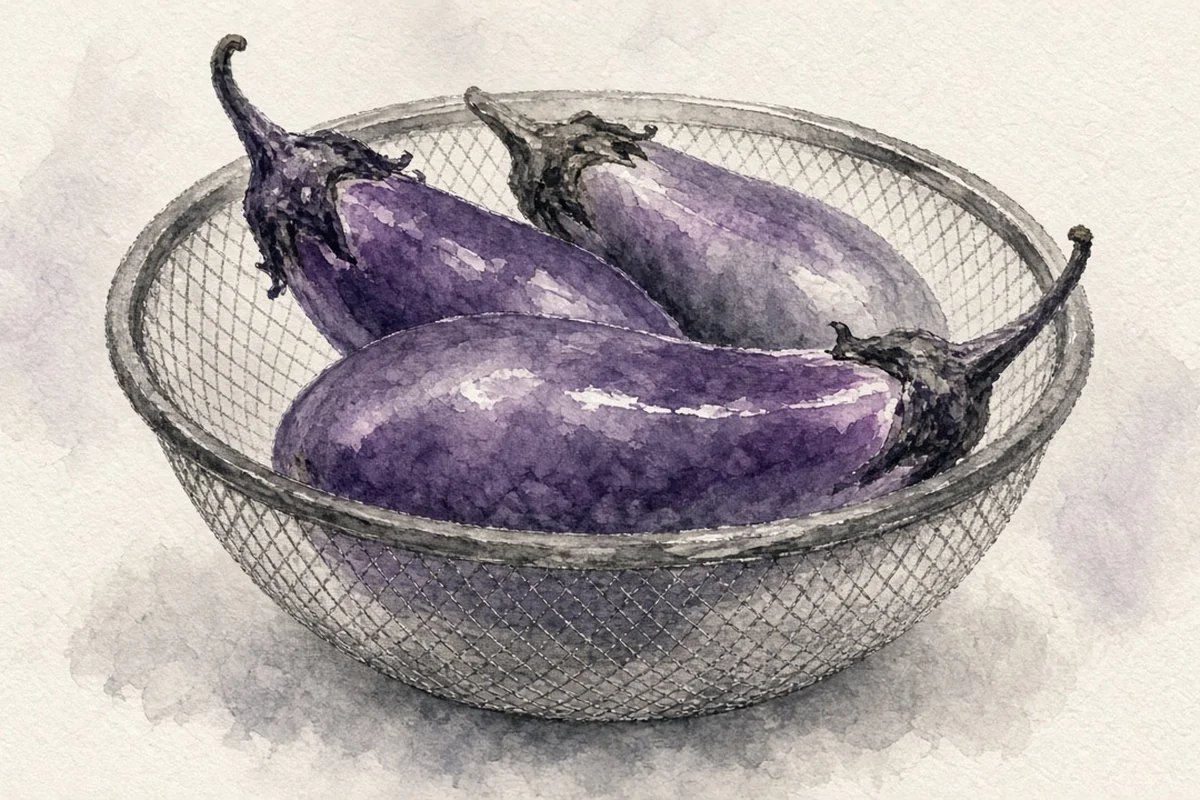
- 4–6 eggplants, trimmed and cut about 1 cm thick.
- 1 T salt; cold water for rinsing.
- 2 T perilla oil and 1 T minced garlic.
- 1 packet powdered broth seasoning.
- ½ T tuna seasoning sauce.
- Chopped green onion and sesame seeds; amounts not specified.
The source uses spoon notation and a packet count. It does not state salt weight, packet weight, eggplant weight, or a measured yield. Choose the named ingredients without treating an invented gram conversion as part of the original recipe.
The source-based cooking sequence
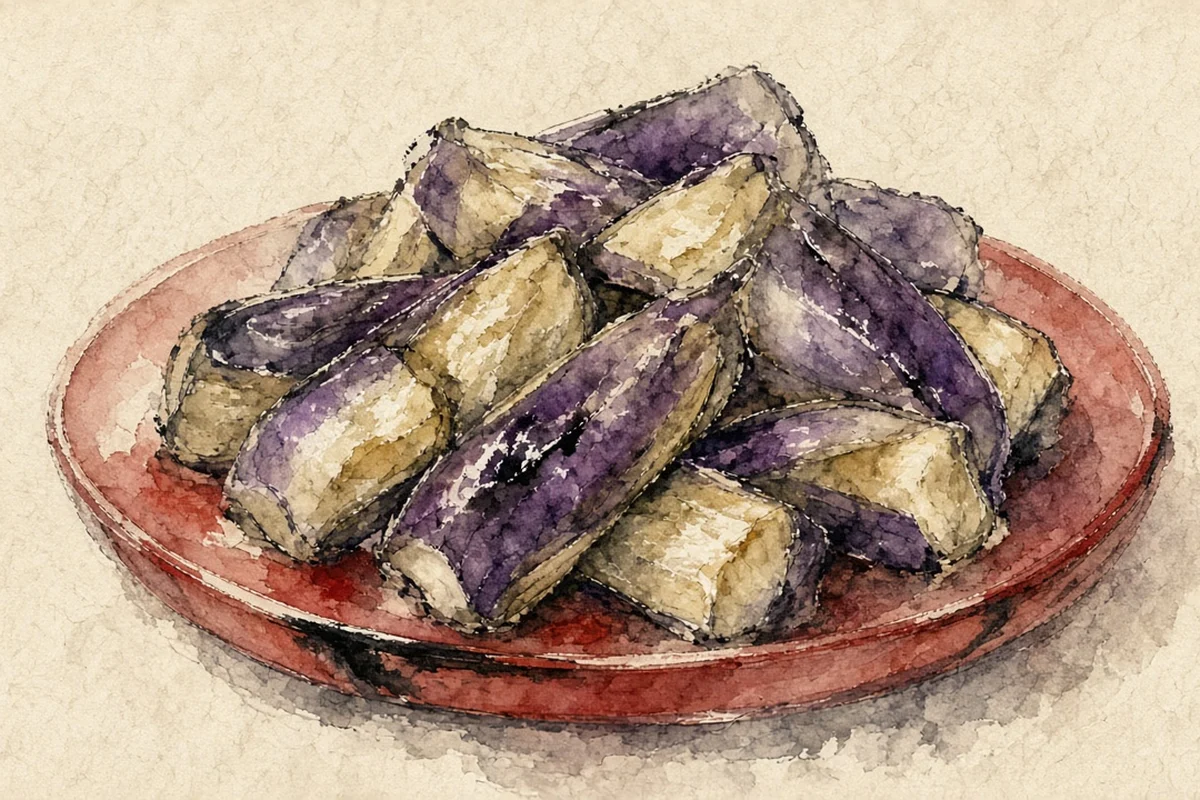
- Wash and trim the eggplants. Cut about 1 cm thick, add 1 T salt, and leave for two hours, turning occasionally.
- Rinse the salted eggplant once or twice in cold water. Firmly squeeze to remove as much water as possible.
- Warm a pan, add 2 T perilla oil and 1 T minced garlic, and cook until the garlic becomes fragrant.
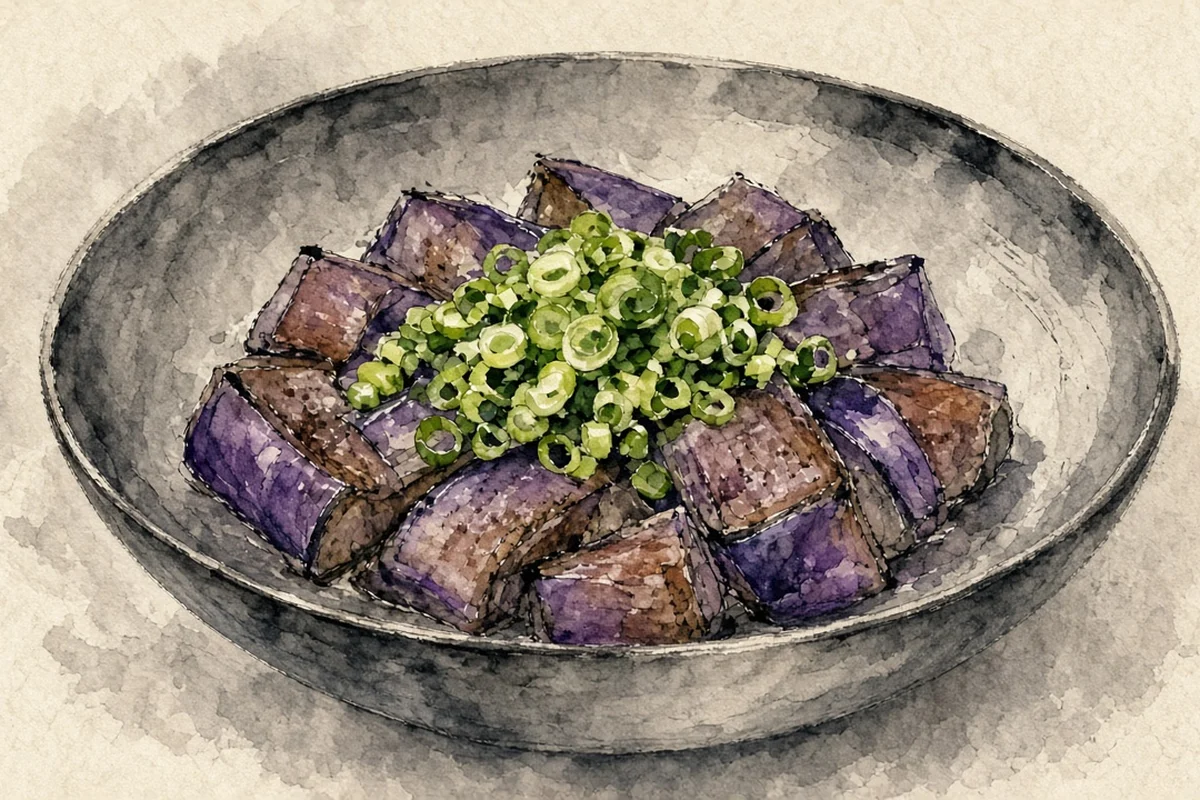
- Add the squeezed eggplant and one packet of powdered broth. Stir-fry over medium heat for the recorded 2–3 minutes.
- Add ½ T tuna seasoning sauce and chopped green onion. Turn off the heat and finish with crushed sesame seeds.
Three decisions that distinguish this dish
Keep the two-hour salting step separate from pan time
The earlier English kitchen note said ten minutes, while the method said two hours. The Korean instructions specify two hours. This correction removes the contradictory note and does not claim that a shorter method gives the same result.
Rinse, then squeeze
These are two distinct actions in the record. Rinsing removes salt from the surface; squeezing addresses the water held by the eggplant. The source emphasizes removing water before the pan stage, so skipping squeezing changes the method rather than simplifying the same recipe.
Use medium heat for the recorded stir-fry
The Korean method specifies medium heat for 2–3 minutes after adding the eggplant and broth powder. The former English version changed that to medium-high. This guide restores medium heat and does not add an unsupported total cooking time.
Using the eggplant as a gimbap filling
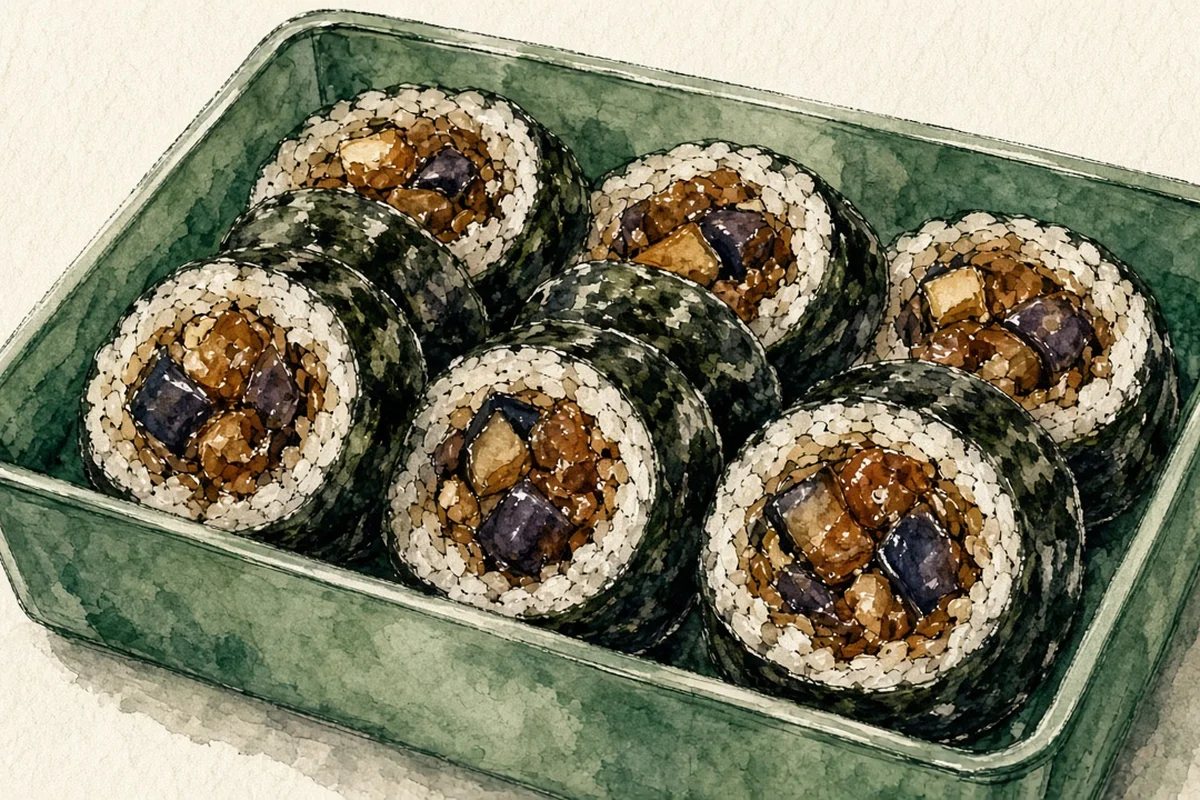
The source describes pairing this eggplant with a thick rolled omelet in gimbap, and describes enjoying the eggplant chilled. Those observations explain why this recipe appears in the gimbap category: it is a filling recipe, not a complete guide to seasoning rice or rolling gimbap.
The record does not give rice quantities, seaweed-sheet counts, omelet measurements, or the number of rolls produced. This page therefore does not invent a complete gimbap formula. Use it for the eggplant component and a separately measured recipe for the remaining components.
Substitutions and unanswered questions
Liquid stock is not established as a tested replacement for the packet of broth powder. Adding a half-cup of liquid changes a recipe whose preparation deliberately removes water; the former English substitution has been removed.
The source names perilla oil and tuna seasoning sauce. It does not report testing sesame oil, soy sauce, or another fish sauce in this batch. Their flavour and concentration may differ, so this guide does not label them equivalent replacements.
No refrigerator shelf life, freezer test, calorie total, or measured serving count is recorded. The repeated storage advice and invented nutrition or serving estimates have been removed rather than presented as tested facts.
Source and editorial record
Adapted with permission from the Korean kitchen record by gayagum12 on NAVER. English drafting used automated assistance. Source comparison completed for this edition on 13 October 2026. Original observations belong to the credited author; this edition is not an independent kitchen or product test.
Ink-wash illustrations are visual interpretations, not documentary photographs of the recipe steps.